
Yes. Railweight in-motion systems are legal-for-trade and conform to OIML R106, with accuracy classes down to 0.2 depending on speed and application, which is accurate enough for commercial invoicing and regulatory compliance.
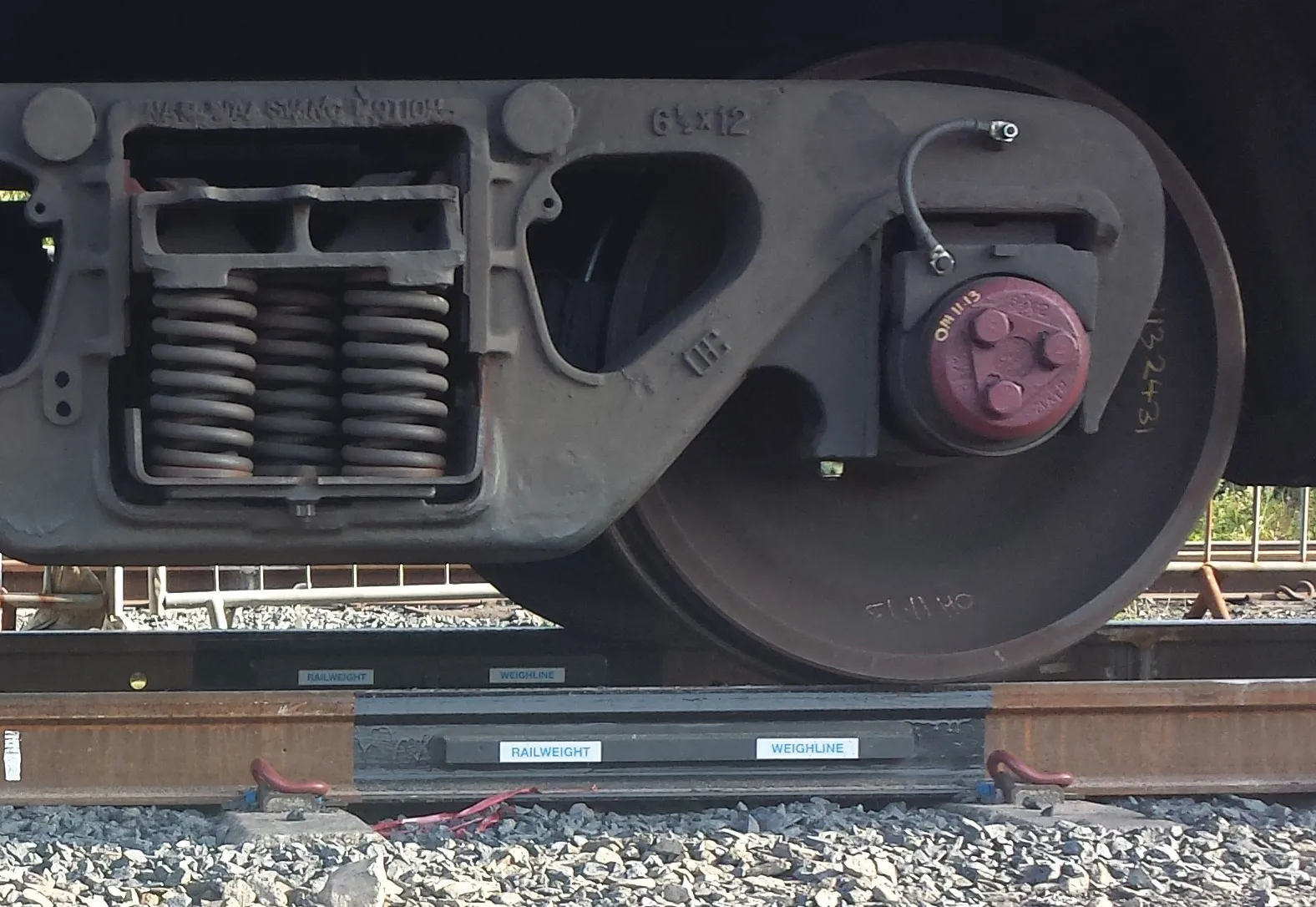
Choose static weighing when throughput is low, trains already stop at the weigh point, or you need the very highest single-wagon accuracy in a controlled setting. Choose weigh-in-motion when throughput matters, downtime is expensive, you weigh mixed traffic, or you want real-time overload and imbalance alerts. For most modern freight, bulk, mining and port operations, in-motion weighing wins on speed, cost and safety while still delivering legal-for-trade accuracy.
In this article
Get this decision right and you protect revenue, prevent overloads and keep trains moving. Get it wrong and you pay for it in downtime, disputes and damaged assets. The core choice comes down to two approaches: static weighing and weigh-in-motion (WIM).
What is static rail weighing?
Static weighing requires each wagon — or an uncoupled group of wagons — to stop on a weighbridge while the weight is recorded. It is a proven, highly accurate method, but it comes at a cost: trains must slow, stop and often uncouple, which consumes time, labour and yard capacity. For a busy terminal moving hundreds of wagons a day, those minutes add up fast.
What is weigh-in-motion?
Weigh-in-motion captures wheel, axle, bogie, wagon and total-train weights as the train travels over in-track sensors, with no stopping and no uncoupling. Railweight’s Weighline and Streamline systems weigh mainline trains at up to 100–110 km/h, and gross, tare and net weights at shunting-yard speeds, recognising mixed rolling stock automatically.
Speed and throughput
The headline difference is throughput. Static weighing forces trains to queue; WIM lets them roll through at line or shunting speed. For operations where wagon movements are the bottleneck, in-motion weighing can transform yard capacity without laying a metre of new track.
It is worth quantifying this for your own site. Take the number of wagons weighed per day, multiply by the minutes each one spends stopping, uncoupling, weighing and recoupling, and compare it against your busiest shift. Most operators are surprised by the answer.
Accuracy and compliance
A common myth is that “in motion” means “less accurate”. Modern WIM closes that gap. Railweight systems are legal-for-trade and conform to OIML R106, offering accuracy classes down to 0.2 depending on speed and application — accurate enough for commercial invoicing and regulatory compliance.
The key is the sensing technology. Railweight’s patented Twin Strip Technology measures true vertical wheel force while rejecting horizontal and torsional deflections, so rail imperfections do not corrupt the reading. If you want the detail, we have written a full explainer on what legal-for-trade actually means and how accuracy classes work.
Installation and disruption
Static weighbridges typically require significant civil engineering — pits, foundations and track modifications — plus the downtime to build them. Railweight’s transducers install into existing railtrack, subject to minimum rail size, quickly and with minimal disruption, because track does not need to be removed or relocated. That means a lower initial investment and a faster return.
Total cost of ownership
Static systems can carry higher civil costs and more moving parts. WIM systems with no moving parts, like Streamline, offer low maintenance and a long service life — a materially lower total cost of ownership over the life of the asset. The first year is where a weighbridge looks competitive; every year after that is where in-motion weighing pulls ahead.
So which is right for you?
- Choose static weighing when throughput is low, trains already stop at the weigh point, or you need the very highest single-wagon accuracy in a controlled setting.
- Choose weigh-in-motion when throughput matters, downtime is expensive, you weigh mixed traffic, or you want real-time overload and imbalance alerts feeding your data platform.
For most modern freight, bulk, mining and port operations, in-motion weighing wins on speed, cost and safety — while still delivering legal-for-trade accuracy.
FAQ's
Often, yes. The TSR4000 indicator works with conventional load cell weighbridges as well as in-track transducers, so a phased upgrade is a common route.
Up to 110 km/h for mainline gross weighing with Weighline and up to 100 km/h with Streamline, plus lower shunting-yard speeds for gross, tare and net weighing.
Not sure which approach fits your site?
Railweight configures every system to the exact needs and budget of the operation. Book an appointment with an expert sales advisor for a free consultation and site assessment.