How Real-Time Weight Data Is Transforming Rail Freight Efficiency
Weight is no longer a static figure on a docket. It is a live data stream that drives smarter decisions across the whole operation, while improving rail freight efficiency.

Weight is no longer a static figure on a docket. It is a live data stream that drives smarter decisions across the whole operation, while improving rail freight efficiency.
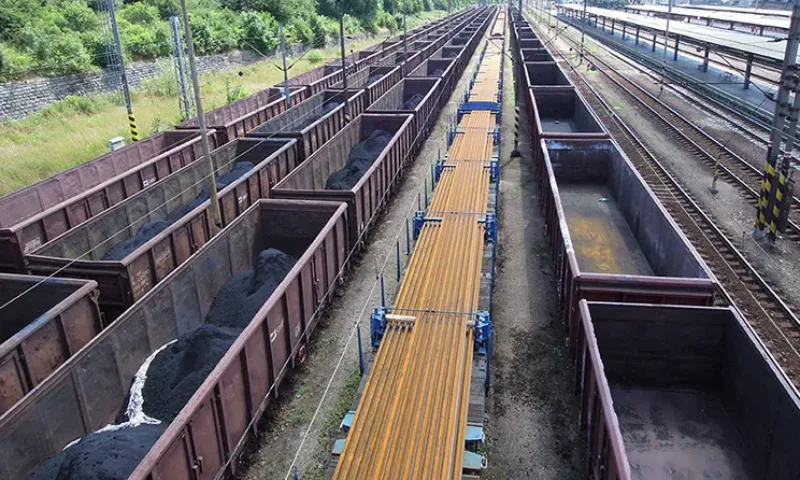
Overloading is one of the most expensive and dangerous problems in rail freight and one of the most preventable.
Choosing how to weigh your rail traffic is one of the highest-leverage decisions a freight, bulk or port operation can make. Here is the honest comparison.
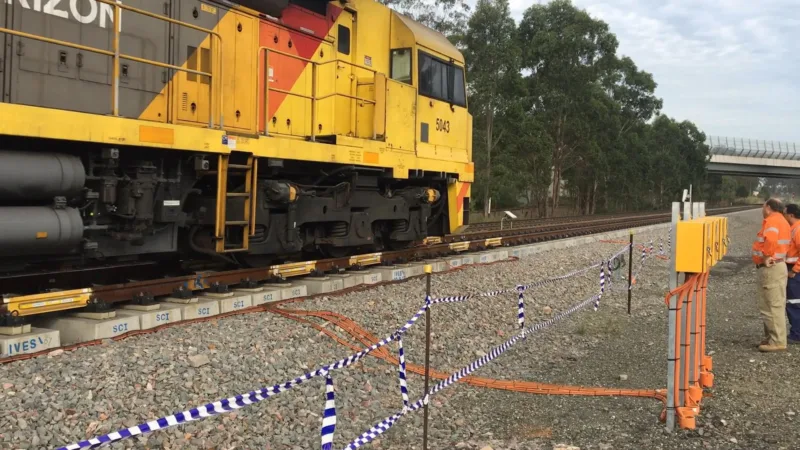
If you invoice by weight, “roughly right” is not good enough. Here is what trade approval actually means for rail weighing.
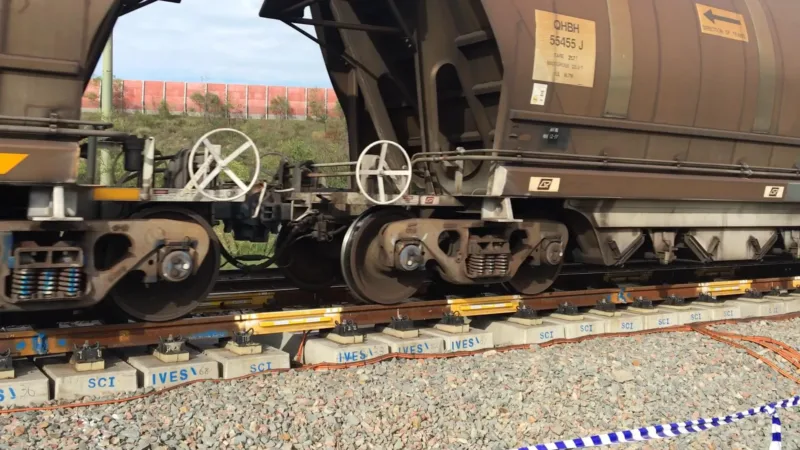
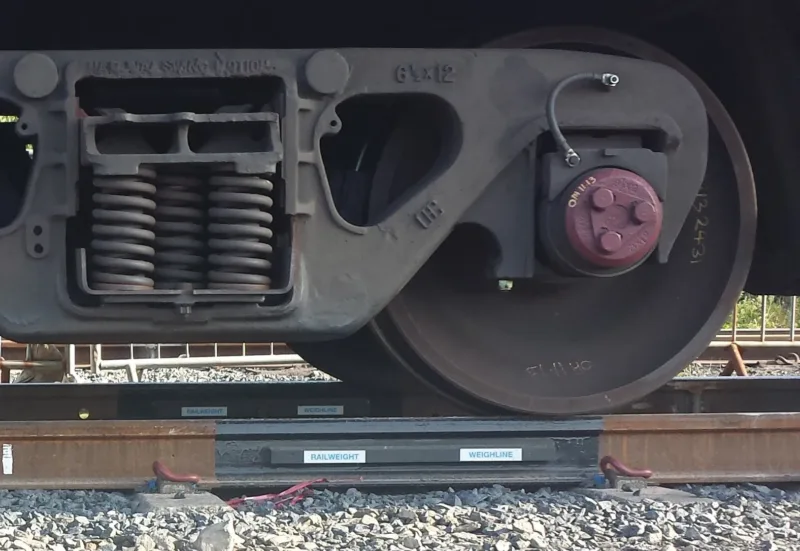
Weigh-in-motion is a method of weighing rail wagons and locomotives as they travel over in-track sensors, without stopping or uncoupling. Railweight’s systems weigh trains at up to 110 km/h, capturing wheel, axle, bogie, wagon and total-train weights in real time.
Static weighing requires trains to stop or uncouple over a weighbridge. Dynamic weighing captures weights while the train moves at line or shunting speed. Dynamic weighing is faster, lowers operational cost and increases throughput.
Up to 110 km/h for mainline gross weighing with Weighline, and up to 100 km/h with Streamline, plus lower shunting-yard speeds for gross, tare and net weighing, depending on application and required accuracy.
Wheel, axle, bogie, wagon and total-train weights, plus gross, tare and net figures at shunting speed. The TSR4000 also reports wagon sequential number, individual wagon speeds and maximum and minimum train speed.
Railweight systems are legal-for-trade and conform to OIML R106, offering accuracy classes of 0.2, 0.5, 1 and 2 depending on application and speed — accurate enough for commercial invoicing and regulatory compliance.
Yes. Railweight systems meet OIML R60 and R106 requirements for trade weighing, so recorded weights can be used for commercial billing.
OIML R106 is the international recommendation from the International Organization of Legal Metrology that governs automatic rail-weighbridges — the standard for weighing railway vehicles in motion. OIML R60 governs the load cells and weighing transducers themselves.
Not with the right sensor. Railweight’s patented Twin Strip Technology measures the true vertical force of each wheel while rejecting horizontal and torsional deflections, and its design ensures dimensional imperfections in the rail or fixing do not distort the main measurement. The result is repeatable, legal-for-trade accuracy at line speed.
No. Railweight’s Streamline and Weighline transducers install into existing railtrack, subject to minimum rail size, quickly and with minimal disruption — avoiding expensive civil and rail works.
Cost depends on line speed, accuracy class, the number of transducers and site conditions. Railweight configures each system to budget. Book a free site consultation for a tailored quotation.
Often, yes. The TSR4000 indicator is designed for conventional load cell weighbridges as well as in-track transducers, which makes it a common route to modernising an older installation.
As an Avery Weigh-Tronix / ITW brand, Railweight provides commissioning, training, spares, and static and dynamic calibration for new and existing installations, with individual service plans and worldwide support.
Rail freight, aggregates, coal, steel, cement, extraction and mining, petrochemicals, recycling, grain and port authorities, plus infrastructure managers and maintenance depots.
Weighing protects the bottom line through accurate invoicing, mitigates risk by avoiding overloading damage and eccentric-load derailments, improves asset management by minimising high-impact loads at joints, turnouts and crossings, and optimises performance through better load control and yield.
Indirectly, and effectively. Capturing accurate weights at key points lets you spot unexplained weight loss between origin and destination and investigate before losses mount.
Twin Strip Technology is Railweight’s internationally patented transducer design used in Streamline. It measures the vertical forces of train wheels while disregarding horizontal and torsional deflections, so imperfections in the rail or the fixing do not affect measurement accuracy.
Signals from up to eight pairs of Streamline transducers are converted into weight by a single weight processor. The number required depends on line speed, the accuracy class you need and the wheel and axle data you want, which a site survey confirms.
Streamline installs into rail greater than 47 kg/m. Weighline uses purpose-built force measurement transducers made from standard rail sections of the same type as those used on the installation site.
Yes. Systems integrate with any Automatic Vehicle Identification (AVI/RFID) system to automatically identify wagons and monitor an entire fleet from a head office, terminal or network hub.