
OIML R106 is the international recommendation from the International Organization of Legal Metrology that governs automatic rail-weighbridges, including the weighing of railway vehicles in motion.
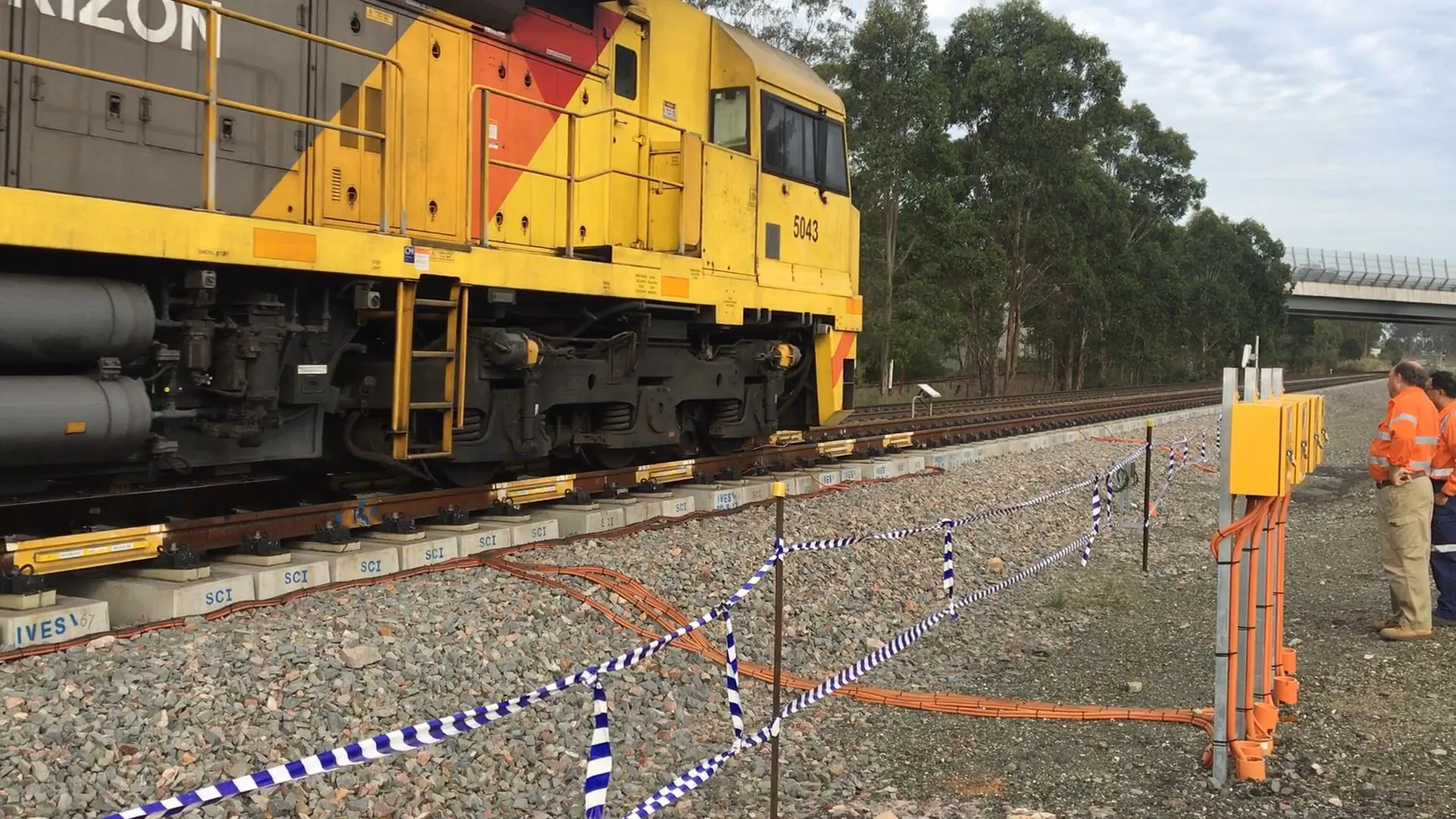
Legal-for-trade means a weighing system is certified to a standard that allows its readings to be used in commercial transactions. For rail weighing, two OIML recommendations matter: R106 governs automatic rail-weighbridges, including weighing in motion, and R60 governs the load cells and transducers themselves. R106 defines accuracy classes 0.2, 0.5, 1 and 2, where a lower number means a tighter tolerance. Railweight’s Weighline and Streamline conform to both, and the TSR4000 supports all four classes.
In this article
To bill customers, settle disputes and satisfy regulators, your weights need to be legal-for-trade, measured by a system that meets internationally recognised metrology standards. Here is what that means for rail weighing, and why it matters.
What does legal-for-trade mean?
Legal-for-trade, sometimes called trade approved, means a weighing system is certified to a standard that allows its readings to be used in commercial transactions. In practice, it is the difference between a number you can put on an invoice and one you cannot. For rail freight, the governing standards come from the OIML — the International Organization of Legal Metrology.
OIML R106 and R60: the standards that matter
Two OIML recommendations underpin trade-approved rail weighing:
- OIML R106 governs automatic rail-weighbridges, the standard for weighing railway vehicles in motion.
- OIML R60 governs the load cells and weighing transducers themselves.
Railweight’s Weighline and Streamline systems conform to both, meaning the measuring components and the complete system are held to internationally recognised accuracy requirements. That distinction matters: a compliant sensor inside a non-compliant system does not give you a billable weight.
Understanding accuracy classes
OIML R106 defines accuracy classes – 0.2, 0.5, 1 and 2 – where a lower number means a tighter tolerance. The class you need depends on the application: high-value liquids or commercial billing may demand class 0.2 or 0.5, while other applications tolerate class 1 or 2.
Railweight’s TSR4000 indicator supports all four classes for both wagon and whole-train weighing, so the system is matched to your commercial and regulatory needs rather than over- or under-specified. Over-specifying is a real cost; under-specifying is a real risk.
Why speed and accuracy are not a trade-off
The classic concern is that weighing in motion sacrifices accuracy. Railweight’s patented Twin Strip Technology is engineered to close that gap. It measures the vertical forces of the wheels while disregarding horizontal and torsional deflections, and its unique design ensures dimensional imperfections in the rail or fixing do not distort the main measurement. The result is repeatable, legal-for-trade accuracy at line speed.
How close can that get in practice? At a bulk marine terminal in Gdynia, Poland, a Streamline system was tested under legal-for-trade metrology conditions: across a 300 tonne load, the deviation was 10 kg. Read the case study.
Calibration: compliance is ongoing
Certification is not a one-time event. Legal-for-trade status depends on correct installation and regular calibration. As an Avery Weigh-Tronix / ITW brand, Railweight provides static and dynamic calibration for new and existing installations, in compliance with international metrology regulations — keeping your system accurate and your data defensible year after year.
What compliance delivers
- Invoices you can stand behind, and fewer billing disputes.
- Regulatory confidence for axle-load and gross-weight limits.
- Auditable, archived records for every weighed movement.
- Protection against both overcharging and revenue leakage.
FAQ's
It depends on what the weight is used for. High-value liquids and commercial invoicing typically call for class 0.2 or 0.5, while other applications are satisfied by class 1 or 2. The TSR4000 supports all four.
The interval is set by your national metrology requirements and the duty of the installation. A Railweight service plan schedules static and dynamic calibration so trade approval never lapses unnoticed.
Get compliant with confidence
Legal-for-trade weighing protects your revenue and your reputation. Book an appointment with a Railweight expert to specify the right accuracy class and compliance path for your operation.