
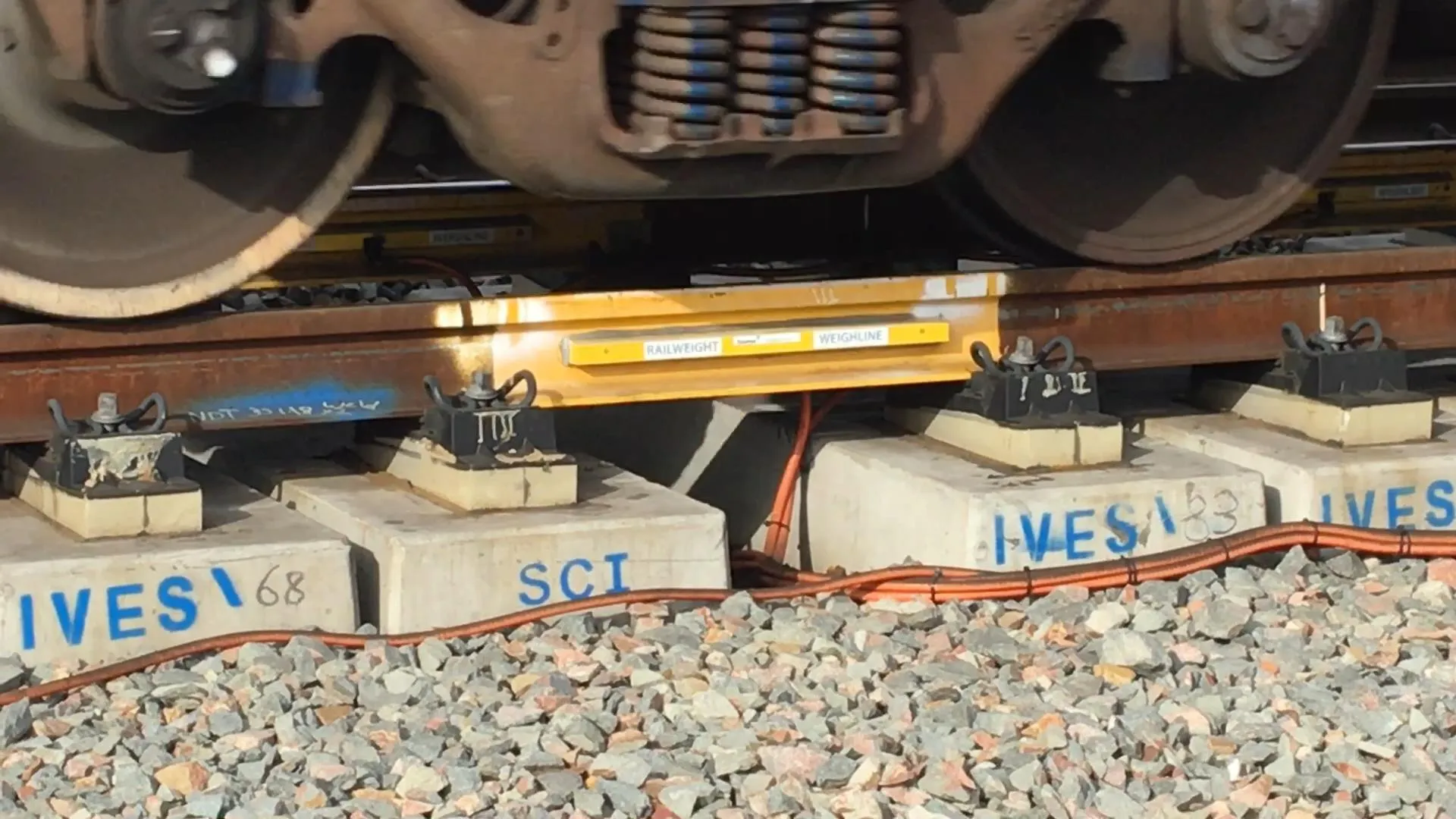
Weighline: In-Motion Train Weighing System
Railweight In-Motion Rail Scale Accuracy
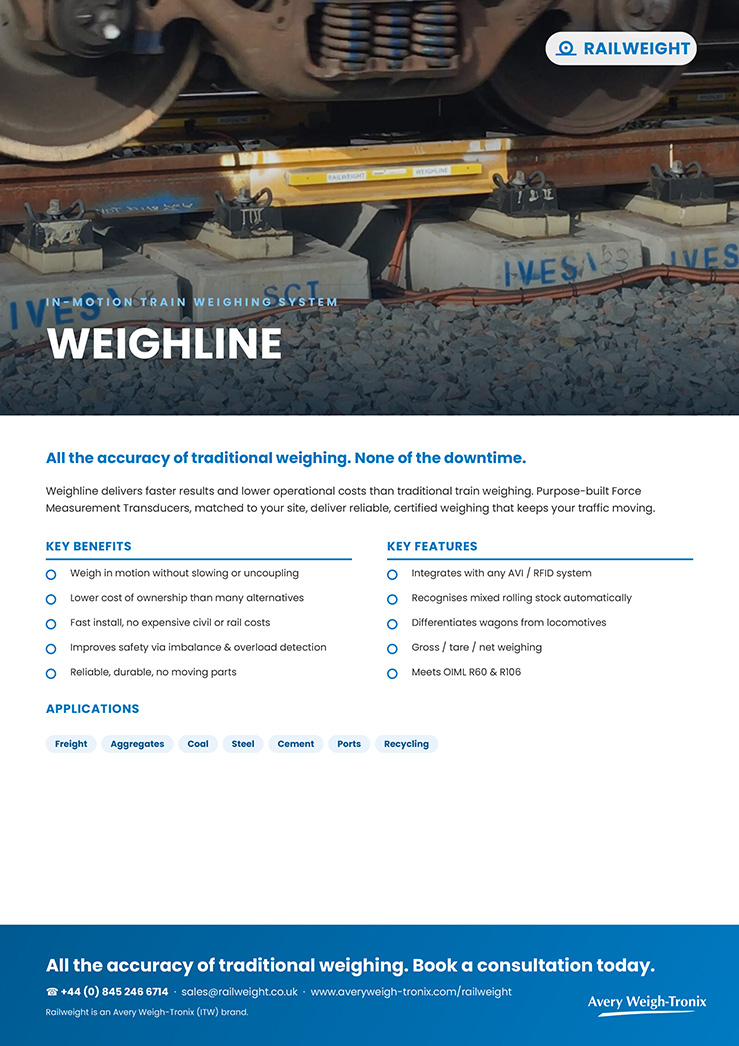
Weighline delivers faster results and lower operational costs than traditional train weighing. Purpose-built Force Measurement Transducers, made from standard rail sections matched to your site, mitigate the impact of lateral loading and temperature for accurate, repeatable, certified weighing.
-
Weigh in motion without slowing or uncoupling trains
-
Lower cost of ownership than many alternatives
-
Fast install with no expensive civil and rail costs
-
Improves safety by identifying imbalances and overloading
-
Reliable, durable, no moving parts, low maintenance
Technical highlights
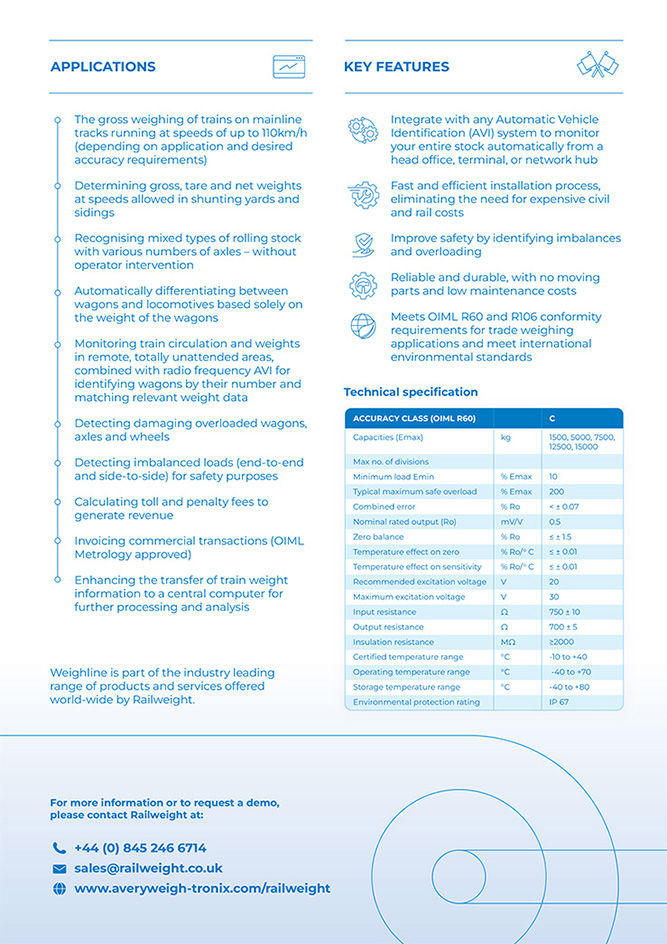
| Max speed | Up to 110 km/h |
| Weighing | Gross / tare / net |
| Identification | Any AVI / RFID system |
| Rolling stock | Recognises mixed types automatically |
| Compliance | OIML R60 & R106 |
In-Motion Train Weighing Product Information
In-Motion Train Weighing FAQ's
Get Question and Answer to Your In-Motion Train Weighbridge Enquiries
Weigh-in-motion weighs rail wagons and locomotives as they travel over in-track sensors, without stopping or uncoupling. Railweight systems weigh trains at up to 100-110 km/h, capturing wheel, axle, bogie, wagon and total-train weights in real time.
No. Railweight’s Weighline transducers install into existing railtrack (subject to minimum rail size) quickly and with minimal disruption, avoiding expensive civil and rail works.
Static weighing requires trains to stop or uncouple over a weighbridge; dynamic weighing captures weights while the train moves at line or shunting speed. Dynamic weighing is faster, lowers operational cost and increases throughput.
Yes. Railweight systems meet OIML R60 and R106 requirements for trade weighing, so recorded weights can be used for commercial billing.
Five Reasons That Separate Railweight From The Alternatives
1
Patented Twin Strip Technology
Twin Strip Technology is protected by international patent. It measures the true vertical force of every wheel while disregarding horizontal and torsional deflection, so imperfections in your rail or its fixing never distort the measurement.
2
Legal-for-Trade Accuracy at Line Speed
Railweight systems conform to OIML R60 and R106, with accuracy classes down to 0.2 depending on application and speed. At a bulk marine terminal in Gdynia, Poland, a Streamline system weighed 300 tonnes with a total deviation of 10 kg under legal-for-trade test conditions.
3
Install Into Existing Railtrack
Weighline transducers install into existing railtrack, subject to a minimum rail size of 47 kg. Track does not need removing or relocating, which avoids the pit, foundations, civil works and downtime a static weighbridge demands.
4
One Supplier for Transducers, Systems, Indicators and Software
Railweight builds Streamline, Weighline, the TSR4000 indicator and I-Line 2 software. Specify them together and the integration risk of mixing three vendors disappears.
5
Backed worldwide by Avery Weigh-Tronix and ITW
Railweight is an Avery Weigh-Tronix brand, part of Illinois Tool Works. Commissioning, operator training, spares, and static and dynamic calibration to international metrology standards come through that network, on existing installations as well as new ones.
The Best Dynamic Rail Scale Supplier

Why Rail Operators Choose Railweight
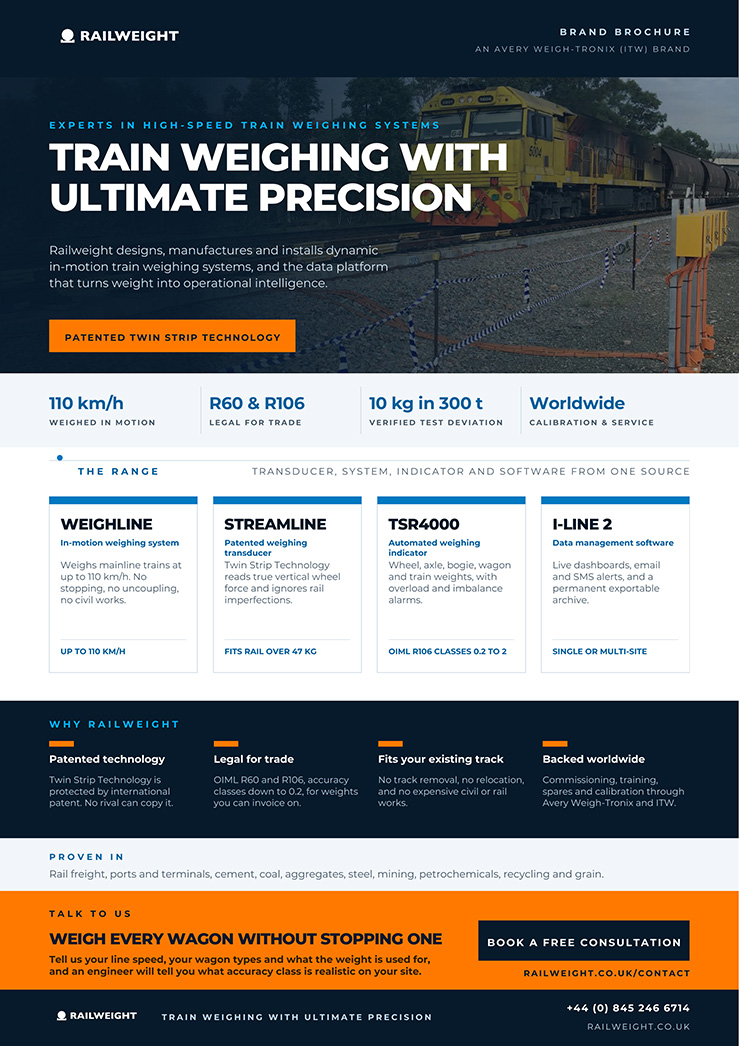
Railweight designs, manufactures and installs in-motion train weighing systems that capture wheel, axle, bogie, wagon and whole-train weights at up to 110 km/h, without stopping or uncoupling. Every system is legal for trade to OIML R60 and R106, installs into existing railtrack and is supported worldwide by Avery Weigh-Tronix.